Whisperai

Comparison guide

Whisper vs Deepgram for Real-World Speech-to-Text

Whisper vs Deepgram is not a simple accuracy contest. The better choice depends on your audio, latency target, privacy boundary, engineering capacity, and how much infrastructure your team wants to operate.

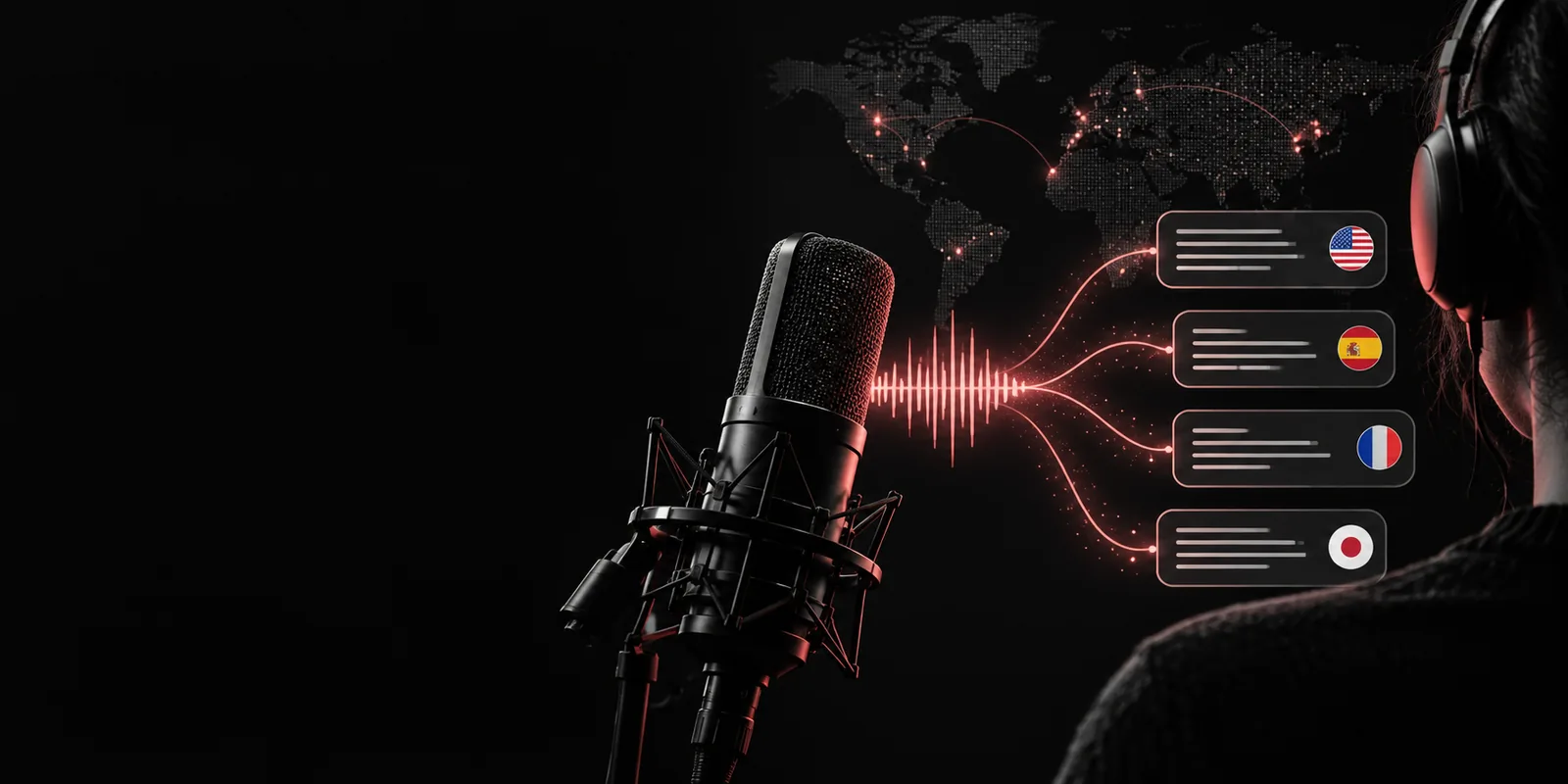
Abstract audio waveform for comparing speech recognition workflows

Keep exploring

Related comparisons

Use these adjacent guides to compare hosted transcription, local deployment, and open-source options from another angle.

Choose by workload

Who benefits from each route

The right engine changes with the job. Start with the operational result you need, then compare the model and service details behind it.

Platform engineer

You already operate GPU or CPU workloads and need audio to stay inside a controlled environment.

Whisper can fit well when deployment control and repeatable batch processing matter more than minimizing maintenance. Compare the broader landscape in whisper alternatives open source.

whisper alternatives open source
Product team

You need a transcription endpoint in a product without first building queues, workers, monitoring, and capacity planning.

Deepgram is often attractive when a managed API can shorten integration work and let the team focus on product behavior instead of model serving. The hosted-service tradeoff is also covered in whisper vs transcribe.

whisper vs transcribe

Podcast or media editor

You process interviews, meetings, or long recordings and need dependable text for search, review, and rough-cut preparation.

Test both engines on the same voices, room noise, overlaps, and domain vocabulary. If alignment detail is central to the workflow, the guide on what are the key differences between whisper and whisperx is a useful companion.

what are the key differences between whisper and whisperx

Support automation owner

You need predictable request handling for a customer-facing flow where delays and operational incidents are visible.

A managed Deepgram path can reduce serving responsibilities, while Whisper can work when your team needs direct control over batching, retries, and data location. Validate the choice with representative support recordings.

whisper vs transcribe

Test the tradeoff

A fair comparison flow

A small, controlled benchmark is more useful than a generic winner. Keep the recordings and evaluation rules constant while you change only the transcription route.

  1. 1

    Define the workload

    List the languages, accents, recording lengths, noise conditions, speaker overlap, turnaround target, and privacy requirements that actually describe your application.

  2. 2

    Run matched clips

    Send identical recordings through Whisper and Deepgram, then compare word errors, missed phrases, formatting, timestamps, failure handling, and the time required to receive usable output.

  3. 3

    Score the whole workflow

    Include engineering effort, infrastructure, review time, storage, monitoring, and maintenance. Choose the route that performs well in production, not only the one with the nicest transcript.

Cost drivers

Total cost table

There is no universal low-cost winner because one option concentrates effort in infrastructure while the other concentrates it in usage and service dependence. Compare the full operating picture rather than one line item.

Whisper
Deepgram

Deployment model

Whisper

Run the model in an environment you control, either directly or through your own application layer.

Deepgram

Send audio to a managed speech API and let the provider operate the core serving layer.

Main cost drivers

Whisper

Compute, storage, bandwidth, engineering time, observability, and capacity that may sit idle.

Deepgram

Audio usage, request volume, selected features, network transfer, and application integration work.

Baseline commitment

Whisper

Existing hardware can reduce incremental cost, but new workloads may require capacity planning and setup.

Deepgram

There is less serving infrastructure to prepare, but every workload depends on an external service path.

Scaling effort

Whisper

Your team manages workers, queues, concurrency, hardware limits, retries, and upgrades as demand grows.

Deepgram

Provider capacity absorbs much of the scaling work, while quotas, errors, and service behavior still need handling.

Latency control

Whisper

You control batching, model selection, hardware placement, and the distance between audio and compute.

Deepgram

You reduce local serving work but depend on upload time, network round trips, and API response behavior.

Privacy boundary

Whisper

Audio can remain within infrastructure selected and governed by your organization.

Deepgram

Audio crosses to a provider endpoint and must be evaluated against current data handling requirements.

Maintenance burden

Whisper

You own model files, runtime compatibility, performance tuning, monitoring, and operational recovery.

Deepgram

The provider maintains core inference; your team still owns integration, retries, logging, and product-level quality checks.

Best cost fit

Whisper

Large repeatable workloads, existing infrastructure, or strict control requirements can favor this route.

Deepgram

Fast delivery, variable demand, and limited infrastructure capacity can favor this route.

Quality caveats

Where quality differs

Accuracy is shaped by the recording and the evaluation task as much as by the engine. Treat these limitations as benchmark requirements, not reasons to assume one route always wins.

No universal accuracy winner

A model that performs well on clean speech may lose on overlapping speakers, distant microphones, heavy accents, or specialized vocabulary.

Workaround

Benchmark clips from your own users and score the failure types that affect your product.

Local Whisper quality depends on setup

Model choice, runtime settings, hardware pressure, audio conversion, and batching can change the result and the turnaround time.

Workaround

Pin the model and preprocessing settings, then record them with every evaluation.

Deepgram still needs application checks

A managed response is not automatically correct. Names, numbers, jargon, crosstalk, and partial audio can still require review or correction.

Workaround

Add domain checks, searchable correction rules, and a review path for high-impact transcripts.

Poor audio limits both routes

Clipping, echo, silence, background speech, and an unstable microphone can dominate the error profile regardless of the backend.

Workaround

Improve capture first and preserve the original audio so difficult segments can be audited.

Workflow view

Where time differs

Time-to-text includes more than inference. Uploads, queueing, local startup, retries, post-processing, and review can outweigh the raw model runtime.

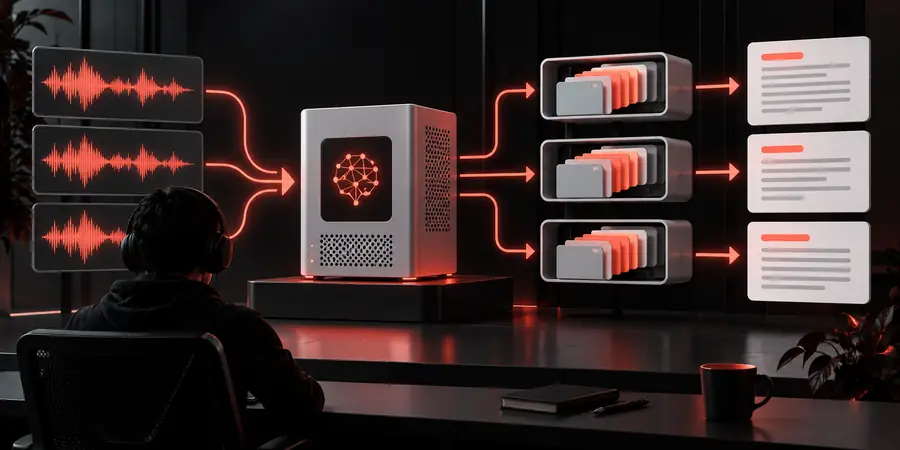
Local transcription workflow with model serving and batch processing steps Self-hosted Whisper path
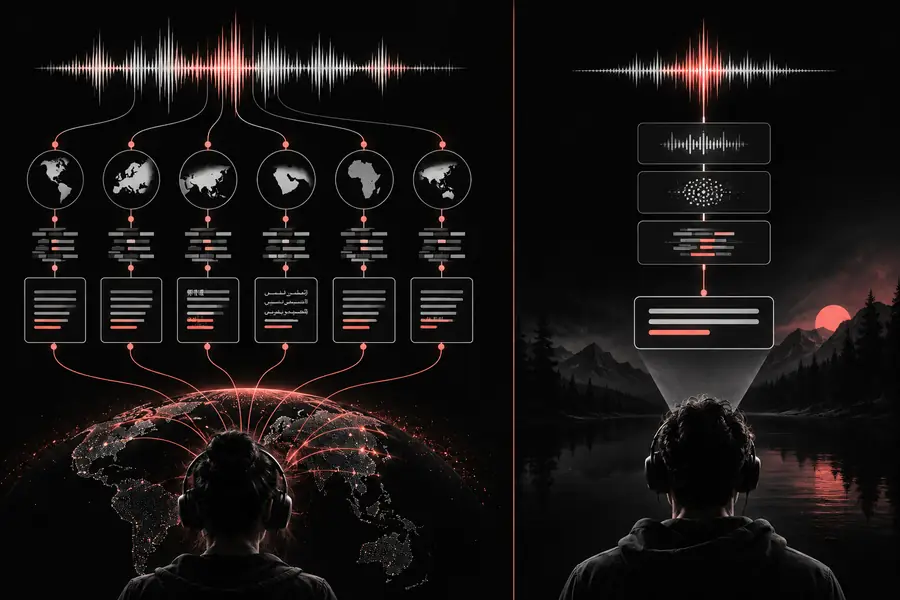
Managed transcription workflow with upload and API response steps Managed Deepgram path
The pair illustrates workflow shape, not a promise that one engine is faster for every recording. Local Whisper can be efficient when audio and compute are colocated, while Deepgram can reduce setup and queue management when a ready service fits the workload.

Make the call

When switching is worth it

Switching from Whisper to Deepgram is worth testing when model serving, scaling, or operational upkeep is slowing product delivery. Staying with Whisper can make more sense when local processing, predictable control, or existing hardware carries real value. The decision should come from a representative benchmark that includes audio transfer, transcript cleanup, monitoring, and human review. Whisperai's guided workflow can help you compare a real sample before changing a production path.

Run a sample
  • Switch when infrastructure work is delaying the product.
  • Stay local when control and data boundaries are decisive.
  • Benchmark your own recordings before committing.

Common questions

Comparison FAQ

The answer depends on workload shape and what infrastructure you already have. Whisper shifts more cost into compute, operations, and maintenance, while Deepgram shifts more cost into managed usage and service dependence.

No. Results vary with language, accents, microphones, background noise, speaker overlap, and domain vocabulary. Compare both engines on recordings that resemble your actual users instead of relying on a general ranking.

Deepgram can reduce time spent building and operating a serving layer, while a well-placed Whisper deployment can avoid network transfer and give you direct control over batching. Measure end-to-end time from captured audio to usable transcript.

Yes, local deployment is one of Whisper's main attractions for teams with suitable hardware and operational capacity. You remain responsible for model setup, updates, scaling, monitoring, and the quality of the surrounding audio pipeline.

Switch when the managed workflow meaningfully reduces delivery time or operational burden without failing your quality and data requirements. Keep Whisper when local control, existing infrastructure, or a proven batch process is more valuable than reducing serving work.

Start transcribing
Start transcribing